

Start with the document the destination actually accepts
An animal health certificate is an official travel document for a specified movement. A routine veterinary check, vaccination booklet or airline declaration may serve a different purpose. Before booking an examination, identify the destination’s required document model and the person authorised to issue or endorse it.
Not every international trip needs the same certificate. A valid passport can be the accepted document for some journeys. Check that branch first: arranging an unnecessary certificate can create expense without resolving the real requirement.
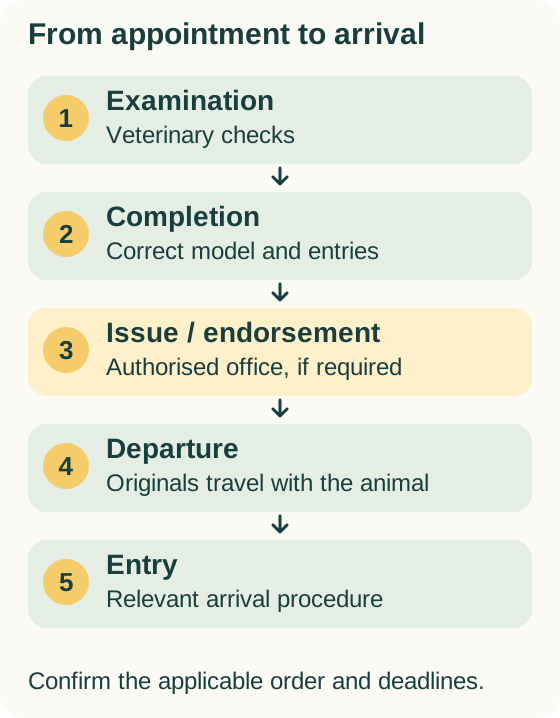
The five events that people confuse
| Event | What you need to confirm |
|---|---|
| Veterinary examination | Who examines the animal, what must be checked and when |
| Certificate completion | Which exact model and language are required |
| Official issue or endorsement | Whether a private vet’s signature needs government validation |
| Departure | Any departure-country export procedure and airline document checks |
| Entry inspection | Where the animal and originals are presented, and which deadline ends here |
A rule expressed as days before entry is not automatically the same as days before the flight. Delays, overnight travel and a connecting border crossing can make those dates different. The reviewed EU certificate example above illustrates why the event used in a deadline matters; it is not a worldwide ten-day rule.
Prepare one briefing for the issuing office
Provide the itinerary and only the personal information the official process requires. Keep sensitive documents with your vet or authority, rather than uploading them to this website.
- Species and number of animals; whether they are your own pets and whether ownership changes.
- Departure jurisdiction, destination, every transit stop and final arrival airport or border point.
- Whether you and the animal travel together; dates for both if they differ.
- Identification and vaccination records, and any test or treatment evidence requested.
- The destination’s official model or written instructions, including any import permit reference.
- Proposed examination, endorsement, departure and arrival dates.
Ask the office to identify omissions before your appointment. Booking an examination does not itself confirm that the necessary supporting records are sufficient.
Schedule the appointments backwards from entry
Write down the planned entry date and the official deadline event first. Then ask the issuing office to place examination, completion, issue or endorsement and document collection in the correct order. Do not assume all of them happen in one appointment.
Before confirming a slot, establish:
- Which records must already be available, and who checks them.
- Whether another office must issue or endorse the document.
- How you obtain the originals before departure.
- Who can assess an amendment or replacement after a flight change.
A booking example: you have a veterinary appointment before departure but have not arranged a required official endorsement. The useful next action is to confirm that office’s procedure and availability. An earlier veterinary appointment alone does not close the gap. This example applies only where endorsement is required.
For departures from Norway, Mattilsynet distinguishes private veterinary preparation from official certification. Use its current appointment instructions in the official-information section to establish which office handles your movement.
Check the document before leaving the issuer
Compare the identifier, names, destination and dates against the records and actual itinerary. Ask the issuer to check signatures, stamps and attachments and to confirm which originals, copies or translations travel with the animal.
If you find a mismatch, have it corrected through the accepted process. Keep the issuing office’s contact details with the document. For a later flight change, send both the old and new itinerary and ask which validity condition is affected. Rebooking a flight does not amend an official certificate.